Your Cart
Your cart is empty
Modular offices are one of the fastest and most reliable ways to set up workspace on-site. But buying the right one isn’t just about size and price, it comes down to getting the details right from the start.
We’ve been manufacturing modular buildings for over 20 years, with proven setups delivered across WA’s toughest regions and industries.
We’ve put together this buying guide to help you choose the right modular office for your job. It covers building types, layout options, services, approvals, site preparation, delivery, and costs so you can plan properly and avoid delays later.
A modular office is a pre-manufactured building designed to be transported and installed on-site. It’s built off-site in a controlled environment, delivered complete, and ready for connection to power, water, and data.
These buildings are used when permanent construction is too slow, too costly, or not practical. They’re common on construction sites, mine camps, logistics depots, regional government projects, and anywhere temporary or semi-permanent infrastructure is needed.
At Instant Transportable Offices, we see modular buildings as more than just ‘offices’. They’re open-plan, adaptable spaces that can be used for admin, lunchrooms, training rooms, meeting areas, or storage (essentially, whatever the job needs).
Modular offices come in a range of sizes and layouts, from your everyday open-plan site offices to high-spec, premium setups that visually look like normal buildings. They can be customised to suit almost any requirement, including accessibility, cyclonic compliance, and placement alongside other buildings such as lunchrooms, ablution blocks, or modular accommodation units.
Once on-site, they’re fast to deploy and easy to relocate or expand. For businesses needing flexibility without cutting corners on compliance or comfort, modular offices are the go-to solution.
All our modular offices come pre-finished with durable materials and essential features ready for immediate use. Standard inclusions across most builds include:

Every unit is manufactured in WA under strict QA, ensuring a clean, strong, and comfortable workspace that’s built to last.
Modular offices are built to solve real problems on-site. They save time, reduce risk, and give you a fully functional workspace without the overheads of traditional construction. Below are the key reasons they’re used across WA’s commercial, government, and industrial sectors.
Modular offices are manufactured off-site and delivered ready to use. That means no lengthy construction windows, no waiting on trades, and no weather delays. Most buildings can be delivered and installed within days, not months, so operations don’t stall waiting on infrastructure.
From high heat to remote terrain, modular offices are made for tough environments. Insulation, ventilation, split-system air conditioning, and structural reinforcements are all standard. For northern regions, buildings can be rated for Cyclonic Region D, with engineer-certified tie-down systems ready to go.
All offices are built to meet the National Construction Code (NCC) and can be supplied to AS1428 standards for accessibility. This covers everything from structural safety to door widths, ramps, and handrails. Whether you’re dealing with government approvals or internal compliance, boxes are ticked.
Need a kitchenette, additional power points, split-system air conditioning or security upgrades installed? Modular doesn’t mean basic. Offices can be configured with custom flooring, lighting, windows, electrical, and internal linings to match your use case. External cladding options are also available for branded or public-facing setups.
If you need something more specific, we offer custom design options to suit your project.
Modular buildings are designed to move. They can be lifted by crane or Hiab, transported to a new site, and reinstalled with minimal downtime. This makes them ideal for shifting project sites, seasonal work, or temporary infrastructure that doesn’t need to be rebuilt from scratch.
Because buildings arrive finished, there’s no extended crew on site, no heavy machinery tying up access, and no clean-up or curing time. This reduces the impact on day-to-day operations, which is especially useful on active job sites or community facilities.
With modular builds, you know the cost upfront. There’s no blowout from weather delays, subcontractor issues, or mid-build changes. You also avoid the lengthy planning, resourcing, and project management that comes with on-site construction.
Although this is a buying guide, it’s still worth quickly covering the difference between hiring and buying a modular office. Both options have their place depending on how long the building is needed and what the job demands.
Buying is perfect for projects with ongoing or repeated use. It gives you full ownership and more control over how the building is customised. If you’re setting up permanent infrastructure or know you’ll be relocating the same unit from site to site, buying often works out better in the long run.
Hiring works well for short-term projects or temporary needs. It gives you fast access to a fully functional building without the upfront capital cost. Maintenance is included during the hire period, and once the job is done, there’s nothing to store or move.
Want a full comparison to help make the call? Read our blog on Hiring vs Buying Portable Offices.
While this guide focuses on modular offices, we also offer a full range of portable site office buildings for shorter-term jobs or where modular isn’t required. These are fast to deploy, fully functional, and ideal for day-to-day site needs.

Tough, practical, and built for daily use on active worksites. Portable Site Offices are typically open-plan or two-room setups (we also offer three-room setups), fitted with air con, lighting, power points, and secure access. These are perfect for supervisors, admin, or short-term teams needing a functional base.
To learn more about how portable offices are built and used, read our blog on What is a Transportable Building.

Designed for more ‘permanent use’ or client-facing operations, Portable Premium Offices come with architectural finishes, commercial glazing, plasterboard linings, integrated air conditioning, and options such as timber-look cladding. They’re often used for sales suites, head contractor spaces, or where presentation matters.
If you’re wanting a full breakdown of the differences between our standard and premium offices, read our blog on Portable Site Offices vs Premium Offices.
Multiple units can be combined to create a larger office footprint. Portable Office Complexes can be configured with meeting rooms, breakout areas, private offices, and shared admin zones. These are common on longer-term projects with higher headcount or layered departments.

Start with what the building needs to do. Will it be a shared admin space? A private office for site management? A training room or a secure area for storage? That will determine the layout and whether you need an open plan, two-room, three-room, or partitioned setup.
Think about how many people will be using it, what equipment needs space, and whether foot traffic, noise, or split teams need to be managed. Internal fit-outs such as kitchenettes, desks, power points and air con can all be configured based on usage.
Not sure on what layout works best? Read our guide on Choosing the Right Donga Size and Layout.
If your building is heading into cyclone-prone regions (such as Region D), it needs to meet reinforced wind loading standards under the National Construction Code. That means cyclonic tie-down systems, upgraded structural framing, and engineered footings.
We manufacture both standard and cyclonic-rated modular offices. For northern WA sites, Region D compliance is non-negotiable and must be considered at the quoting stage to avoid issues during install or inspection.
Learn more in our blog on Cyclonic vs Non-Cyclonic Buildings, or view our full breakdown of Cyclonic Rating Building Codes.
Each building needs to be connected to site services. Power is typically required for lighting, split systems, and internal equipment. Depending on use, you may also need water and waste connections for kitchenettes or adjacent amenities such as toilets and showers.
Plan where the building will be placed and check whether services are already in place or need to be added. We can coordinate this during delivery, but clear plans help avoid downtime on install day.
Most modular office installs require approval through local councils or private certifiers. Buildings must meet NCC standards, and if accessibility is required, they’ll need to comply with AS1428 (e.g. ramp access, door widths, and clear turning space).
We offer assistance with approvals if needed and can build to spec for both standard and accessible use cases. It’s worth checking early what documentation is needed so there are no surprises closer to handover.
If the building is being installed permanently or needs council sign-off, you may also need a 6-star energy efficiency assessment under the NCC. We can help organise this as part of the compliance process and advise on what’s required for your site.
Modular offices offer strong value, especially when time, flexibility, and future use matter. The initial cost depends on the size, layout, spec, and site conditions, but long-term savings are where modular shines.
Compared to traditional construction, modular buildings are faster, simpler to install, and easier to manage. And once the building’s on-site, it becomes a working asset.
If you’re looking to compare modular builds with permanent construction, read our guide on Modular vs Traditional In-situ Buildings.

We’ve delivered thousands of modular buildings across Western Australia and know exactly what’s needed to get the job done right. That’s why we typically handle the full delivery and installation process ourselves to make sure your building arrives exactly as it should, without the risk of delays or mistakes from third-party contractors.
Once your modular office is signed off, our team takes care of the rest. Here’s what the process typically looks like.
Once approved, your building is constructed in our WA-based manufacturing facility under controlled conditions. All units go through a multi-point QA process covering frame integrity, cladding, internal fit-outs, lighting, air con, flooring, and window security. If custom modifications are part of the scope, we handle those in-house before dispatch.
Your site needs to be ready before delivery. We’ll confirm access requirements, site levels, and advise if concrete footings or groundworks are needed — especially in cyclonic regions. In most cases, footings are required for structural stability, long-term levelness, and council compliance.
If you’re unsure about the difference between footing types or whether your building needs them, we’ve covered that here in our blog on Why Are Concrete Footings Needed for Transportable Buildings?.
We can supply standard or cyclonic-rated footings ex-Perth and arrange installation, ensuring the whole process aligns with engineering specs and NCC guidelines.
Depending on your location and site access, buildings are transported using tilt trays, side-loaders, or crane assist. All units are secured, protected during transit, and delivered with clear communication around arrival time and on-site positioning.
We deliver across the Perth metro area and throughout regional WA, including remote mine and infrastructure sites.
Once on site, the building is craned into position (or slid into place) and installed on the prepared footings. We ensure level alignment, tie-downs are properly fixed, and the structure is stabilised per Region A or D compliance if applicable. If steps, ramps, or access systems are required, these are installed at this stage.
Service connections (power, water, and data) can be handled by your contractors or coordinated through our team, depending on your preference.
A final walkthrough is completed to ensure the building meets spec and is ready for use. All internal systems (lights, power points, AC) are tested, keys handed over, and any additional details (such as maintenance or warranty info) are explained on-site.
From this point, the building is ready for immediate operation.
We’ve supplied modular offices to construction, mining, transport, logistics, education, government, and private sector clients. They’re commonly used as:
With custom layouts and fit-outs available, these buildings are made to suit your use case.
Read the full breakdown of Industry Use Cases.
In most cases, yes, especially for permanent installations. Approval requirements vary by council and use case. You’ll likely need a building permit and to meet all NCC and accessibility regulations. We offer help with this process if you need support getting things over the line.
We keep a wide range of standard modular offices in stock and ready for dispatch. If a custom setup is needed, we’ll manufacture it to spec. Timeframes depend on scope and requirements, but standard offices can often be delivered in under 1–2 weeks for metro WA.

Hopefully this guide has given you a clear understanding of what to consider when buying a modular office.
At Instant Transportable Offices, we’ve been manufacturing and delivering modular buildings across Western Australia for over two decades. If you’re looking for modular offices for sale, we’ve got proven solutions that are ready to go and we can customise to suit.
If you’ve got questions, need help with a quote, or want advice on your site setup, give us a call on 1300 315 950 or contact us online. Our team’s here to help you get it sorted.
Electrical, lighting, and data systems are some of the most common questions we field when clients are setting up a demountable office.
And rightly so, as a site office isn’t much use if it can’t power a laptop, connect to a network, or light the space properly for work. That’s why all Instant Transportable Offices are delivered with integrated power, lighting, and data inclusions as standard.
If connectivity and site readiness matter on your project, here’s how we make sure everything is good to go from day one.

Every demountable office from Instant Transportable Offices is delivered with a full internal electrical fitout, built and tested prior to dispatch. This ensures your building arrives ready for immediate connection by a licensed electrician on site.
All wiring is concealed within the wall or ceiling cavities and installed by licensed electricians during factory build. Each unit is tagged and tested before it leaves our yard to ensure compliance and safety.
This standard setup covers what most sites need for immediate usability, but it’s only the beginning if you need customisation.
Our demountable offices are wired for efficiency from the start, with systems designed to meet site standards, reduce energy use, and support long-term reliability.
Every building is tested and tagged before dispatch, ensuring safety, efficiency, and compliance are covered from the start.

For clients who need network access, we can install Cat6 data cabling during the build and terminate it to standard wall plates. This allows for easy setup once the building is on site. We also leave allowance for mounting a router or network switch in a designated area if needed.
We don’t supply or install network hardware, but we do ensure the office is ready to accept them. If clients need secure cabinets or racks installed, our team can allow for this during the build.
This approach keeps things flexible while still giving your IT team or contractor a clean, ready-to-use setup.
Every site is different, which is why our demountable offices can be configured to suit a range of electrical and lighting needs beyond the standard setup.
Clients can also request specific outlet locations, split circuits for machinery, or separation between general and IT power. All work is handled in-house during the build, so your unit arrives ready to connect and use.
Electrical and data fitouts are completed during the build process. This ensures each demountable is delivered as a functional, pre-tested unit ready for immediate connection.
During quoting, we confirm your power needs, preferred outlet positions, lighting setup, and any custom inclusions such as extra lighting or solar pre-wire.
All wiring, outlets, lighting, smoke alarms, and data cabling are installed during manufacture by licensed electricians. Conduit is run within the wall and ceiling cavities to keep everything neat and protected.
Every circuit is tested, tagged, and verified to meet:
The building is delivered to site and positioned by our install team or your contractor. Once placed, a licensed electrician can connect it to mains power or generator supply via the external termination point.
Your site electrician completes the final connection and performs a verification test. We provide documentation of the internal testing completed prior to dispatch, making the handover simple and compliant.
By completing most of the setup in-house, we reduce the need for multiple trades on site and ensure a faster, safer commissioning process.
Most demountables look the part, but not all of them are built to perform straight away.
At Instant Transportable Offices, our demountable offices for sale are designed to be usable from the moment they land. Power, lighting and data systems are installed and tested during the build, saving time and avoiding delays once you’re on site.
If you need a site office that’s functional from day one, we can help you configure the right setup, with electrical, lighting and data fitouts tailored to your project.
Call us on (08) 9406 6600 or contact us online to get started.
Need a quick, reliable building solution for your site? A donga might be exactly what you’re looking for. Built tough and ready to go, dongas are used across WA for everything from site offices to accommodation and lunchrooms.
But not every project needs the same setup. Picking the right size, layout and features from the start can save you time, money and headaches later on. Here’s what to know before you lock one in.
A donga is a transportable, demountable building used widely across Australia for temporary site infrastructure. It’s a general slang term that covers a range of portable buildings, such as site offices, lunchrooms, and even accommodation units. Most people just call them dongas because it’s quicker and easier.
Common in the mining, construction and government sectors, dongas are built off-site, delivered ready to go, and designed to handle tough conditions. They’re a smart alternative to permanent builds when speed, flexibility and compliance are key.
At Instant Transportable Offices, we offer a wide range of layouts and sizes to suit different job types and site conditions.
A flexible setup with space to move and rearrange.
When you need a bit of separation or dual use.
For multi-purpose or high-traffic use.
Read more on layouts, floorplans and choosing the right size in our blog What to Know About Sizes and Layouts When Buying a Donga.
Not every site needs the same setup. Choosing the right donga comes down to what you’re using it for, how long you’ll need it, and where it’s going. Here are the key things to look at before making a call.
Start with the job. Is it for a project manager’s office, a crew lunchroom, or somewhere to sleep? The function will guide the size, layout and internal fit-out.
Remote location? Cyclone region? Dust, heat, or tough access? Make sure your donga is built to handle it. All ITO units are engineered to meet NCC standards and can be customised to comply with Region D Cyclonic Zones.
Again, think about how the space will be used day-to-day.
Bigger isn’t always better. Match the size to your available space and how many people will be using it. Sizes range from compact 3.6m units to large 9.6m x 3m setups. All delivered ready to use.
All ITO dongas come fitted with reverse cycle air conditioning, lighting and power. If you need plumbing, data points or extra service access, these can be factored in before delivery.
Short-term project? Hiring might make more sense.
Long-term or ongoing use? Buying gives you full control and better value over time.
We also offer a flexible hire-to-buy option if you’re not ready to commit upfront. Instant Transportable Offices supports all three with ready-to-go stock, fast quoting, and delivery across WA.
We cover this topic in more detail in our blog Hiring vs Buying Portable Offices: Which is Better?

Instant Transportable Offices supplies dongas that are built for Western Australian conditions and tailored to suit the job at hand. Whether you need a single office, multi-room layout or a more specialised fit-out, our team can deliver a solution that’s ready to work.
We offer internal modifications such as partition walls, extra windows, service access points, and layout changes based on how the building will be used. All units come standard with reverse cycle air conditioning, LED lighting, power outlets and insulated panel construction.
For sites in high-wind or cyclone-prone areas, we offer full structural upgrades including certified tie-down systems, reinforced flooring, and galvanised steel framing. Units can also be configured for specific operational needs such as display suites, sales offices or long-term site use.
Every unit is manufactured to meet the National Construction Code and can be supplied to meet ISO certification requirements where required.
Hopefully this guide has made it easier to understand what to look for when choosing a donga and how to match it to your project.
At Instant Transportable Offices, we supply dongas for sale, built locally and ready to go. If you’ve got questions, need help with a quote, or want advice on your site setup, give us a call on 1300 315 950 or contact us online. Our team’s here to help you get it sorted.
A donga’s only as good as the ground it lands on, and installs can go sideways if the basics aren’t ticked off early.
We’ve put this guide together so you know what to get sorted before your donga arrives. A bit of planning upfront means install day goes to plan and you’re not stuck dealing with access issues, soft ground, or missing service connections.
At Instant Transportable Offices, we’ve delivered to just about every kind of site in WA. This is what we look for, what we ask before we show up, and what’ll save you time, money, and headaches on the day.
When a site’s not ready, things can get complicated fast. If the pad isn’t level or the ground can’t take the weight, we might have to place the donga somewhere else entirely, which isn’t always where you planned. That can throw out your whole layout, slow down setup, or force extra workers to fix it after the fact.
It’s the same with access and services. If there’s no way to get the truck or crane in safely, or if power and water aren’t sorted, the install gets pushed or held up. Getting these basics right doesn’t take much, but it saves a heap of stress, time, and cost once it all arrives.

Before any transportable building is installed, the site must have a level, compacted surface capable of bearing the unit’s weight. A stable base ensures proper structural support, prevents movement over time, and allows for compliant tie-down installation.
We recommend preparing a compacted gravel pad that extends beyond the full footprint of the donga. This base should be graded flat and compacted to a suitable bearing capacity, depending on the unit size and site conditions. If the soil is loose, sandy, or previously disturbed, additional compaction or engineered remediation may be required.
In most cases, we will recommend installing concrete footings or piers to anchor the donga properly, regardless of wind region. It provides a more reliable foundation, especially for long-term or permanent setups. These are typically designed by a structural engineer and installed prior to delivery, allowing the building to be fixed directly to compliant anchor points. Our team can advise on footing specifications and provide tie-down certifications as needed.
If your donga needs power, water, sewer, or data, those service points need to be in place before install. We recommend planning this with your trades early, as the last thing you want is a fully installed building with nowhere to plug in.
We can assist with service connections as part of our full install offering. If you have site plans showing service locations, we’ll quote the work directly. If not, we can organise a contractor visit to scope what’s needed.
We’ll also provide you with all the necessary connection specs for your unit upfront, so your team knows exactly where to run conduits, pits or pipework before we arrive.
Clear site access is critical for a smooth delivery. Our dongas are typically transported by tilt-tray or Hiab, and in some cases craned into position. All of these require space, clearance, and stable ground.
We recommend checking that your site has a clear path for delivery vehicles, with enough room to manoeuvre and unload safely. This includes gate widths, turning areas, overhead clearance (no trees or powerlines), and a firm surface capable of handling heavy trucks. If the access track becomes soft after rain, it’s worth considering gravel reinforcement or an alternative route.
If craning is required, we’ll confirm lifting points and advise on minimum clearance needed. Our team can also assess access during a site visit and help plan the best delivery method based on your layout.

We strongly recommend installing engineered concrete footings for all buildings, including temporary or short-term setups. For regions with higher wind ratings (particularly Cyclone Region D) this becomes mandatory. In these areas, footings and tie-downs must be designed and certified by a structural engineer, based on your exact site and building configuration.
A generic solution won’t pass council approval. Each site requires specific engineering documentation with original ink-signed drawings (usually three copies for submission). Without this, your building won’t be signed off and, more importantly, won’t meet the safety standards required for cyclonic conditions.
Instant Transportable Offices can coordinate this process for you, including site-specific footing designs and certification. Our team works with experienced structural engineers to ensure the system is compliant and ready for council lodgement if required.
For a full breakdown of what’s required in cyclonic zones, check out our guide to Cyclonic Ratings for Buildings.
Depending on the location and use of your donga, council approval may be required before installation. This is especially common for long-term buildings, structures in high-risk zones, or anything connected to permanent services. Missing this step can delay occupancy or result in fines if the building is placed without permission.
We recommend confirming early if your project needs a Development Application (DA), Building Permit, or any other form of council sign-off. If you’re unsure, we can guide you through the process or manage it on your behalf, including engineering, documentation, and follow-ups.
You’ll also need to allow for the required safety clearances around the building. This includes:
We can assist with layout planning and ensure your building is positioned to meet compliance and practical access standards.
When delivery day comes, your site should be fully prepped to avoid any delays or rework. Here’s what needs to be locked in before the truck arrives:
Our delivery and installation team will take care of positioning, levelling, tie-downs, and any other scope of works we’ve agreed on.
Once your donga is positioned and fixed down, a final inspection should be carried out before sign-off. This ensures everything is safe, compliant, and ready to use.
We recommend checking:
If we’ve handled the install, we’ll complete this inspection with you on site. Any outstanding works or finishing items will be flagged and resolved before handover. From there, your donga is good to go.
At Instant Transportable Offices, we support clients through every step to make sure the install goes to plan and the building performs from day one.
We offer:
By managing the entire process in-house, Instant Transportable Offices ensures clear communication, full accountability, and a high-quality result from start to finish. Every project is delivered in line with our ISO-certified systems for quality (ISO 9001), safety (ISO 45001), and environmental management (ISO 14001).
With the right preparation and experienced delivery support, setup becomes one less thing to worry about.
Instant Transportable Offices supplies dongas for hire and sale, with full delivery, footings, service connections, and compliance support available across WA. Speak to our team on 1300 315 950 or get in touch online to organise your installation.
For a long time, demountable buildings were dismissed as temporary fixes. Fine for a few months on-site, but never a lasting solution. But the truth is, that thinking is outdated.
With rising construction costs and tighter project deadlines, many organisations can’t afford slow, traditional builds that blow out budgets and schedules. They need quality infrastructure that’s quick to deliver and built to last.
That’s where modern modular construction steps in. At Instant Transportable Offices, we design WA-made demountables that meet the same standards as permanent structures, durable, compliant, and ready for long-term use. From remote mine camps to council facilities, they’re proving that “temporary” no longer means short-term.
Demountable buildings have evolved from simple post-war site huts into fully engineered modular structures built for long-term use. What started as basic, relocatable rooms for schools and work camps in the 1950s has become a leading construction method across Western Australia.
Modern demountables are now manufactured in controlled facilities using steel framing, insulated wall panels, and integrated plumbing and electrical systems, which are the same standards used in traditional construction. This factory-built precision means faster delivery, consistent quality, and stronger, more durable buildings.
Instant Transportable Offices designs and constructs WA-made modular buildings that meet permanent building requirements from the start. Each unit is durable, efficient, and purpose-built for long-term use across commercial, industrial, and government sites.
Yes, they can. Modern demountable buildings are designed and certified to meet the same construction standards as permanent structures. In Western Australia, this means compliance with the National Construction Code (NCC), as well as local council and WA Building Commission requirements.
Demountable buildings are assessed and approved in the same way as in-situ construction. The difference is in the process, not the outcome. Modules are built off-site under strict factory conditions, then transported and installed with full engineering certification and inspection, exactly as a traditional build would be.
At Instant Transportable Offices, every modular unit is engineered to meet Australian Standards, including structural wind ratings for Cyclonic Region D, fire safety, and accessibility under AS1428. Our buildings are also backed by ISO-certified quality, environmental, and safety systems to ensure consistency from design through to installation.
These standards allow demountables to be approved for permanent installation across commercial, industrial, and government sites. When constructed and anchored correctly, they deliver the same long-term safety, comfort, and performance as any conventional building in WA.

Durability is one of the biggest concerns when choosing a demountable for long-term use. Clients want to know their investment will stand up to Western Australia’s climate, deliver comfort year-round, and remain low-maintenance over time. That’s exactly what Instant Transportable Offices is built to deliver.
Many temporary buildings fail because they weren’t built for the environment they’re placed in. Our demountable offices are.
Each structure is engineered to handle Cyclonic Region D conditions, using steel frames, galvanised top and bottom plates, and Endurotruss roofing systems. The result is a building that won’t flex, twist, or degrade in harsh heat, wind, or coastal conditions. For our clients, that means fewer repairs and uninterrupted operations, even in the toughest locations.
Poor insulation is a major issue with older demountables. It leads to rising power costs, uncomfortable workspaces, and constant maintenance. We solve this with Structurally Insulated Panels (SIPs) that create a stable internal temperature year-round. The benefit is a workspace that’s energy-efficient, quiet, and comfortable, which keeps running costs low and productivity high.
Short-term buildings often cost more in the long run through constant upkeep or early replacement. Our demountables are constructed to the NCC and built with longevity in mind. Every wall, floor and connection is designed for strength and easy maintenance. As a result of this, you’ll get a long-lasting asset that performs year after year, protecting both your budget and your operations.
We know project managers and procurement teams want certainty. That’s why our buildings are made locally, inspected before delivery, and supported by our ISO-certified quality systems. When you invest in an ITO demountable, you’re getting a product that’s proven, compliant, and ready for long-term use.

Schools and training centres rely on demountable classrooms to expand quickly without compromising quality or compliance. What were once “temporary blocks” are now full-time learning environments complete with air conditioning, amenities, and durable finishes.
Councils across WA use demountables for community offices, libraries, and sporting facilities. With faster install times and lower disruption to public spaces, modular construction lets councils meet community needs without long construction delays.
In WA’s north, demountables are the backbone of long-term mine sites, camps, and operations hubs. Built to withstand heat, dust, and cyclonic conditions, they offer lasting comfort and compliance in places traditional construction can’t reach. For mining operators, this reliability translates to safer worksites and consistent housing for their crews.
A lot of businesses now use demountables as permanent offices or showrooms. They want buildings that look professional, perform well, and can be delivered without the usual build delays.
That’s why we often point people towards our Premium Offices. They’re built for long-term use and can be finished to look like part of your existing setup. You can add cladding, verandas, steps, decking or colour-matched panels so it blends in and looks professional. Inside, it’s the same story, with proper insulation, air conditioning, and a clean fit-out that holds up over time.
If you’re unsure which way to go, check out our blog What’s the Difference Between our Portable Site Offices and Premium Offices? It breaks down what you get with each option and helps you pick what’ll work best for your site.
Modular buildings are one of the most sustainable ways to build in Western Australia. They use fewer materials, create less waste, and can be reused instead of demolished.
Here’s why they’re a smarter, greener option:
Real sustainability comes from building smarter, not harder. Modular buildings deliver that balance of strength, efficiency, and long-term value.
Demountable buildings have earned their place as a long-term solution for modern sites. For businesses, councils, and projects across WA, they offer the flexibility to expand or relocate without starting from scratch.
At Instant Transportable Offices, we supply demountable buildings for sale and hire, built locally and made to perform for permanent use. If you’ve got questions, need help with a quote, or want advice on your site setup, give us a call on 1300 315 950 or contact us online. Our team’s here to help you get it sorted.
Setting up a temporary site involves more than delivering buildings. Every location brings different logistical, environmental, and compliance factors that need to be addressed before deployment.
This checklist covers the key considerations that often get overlooked but can impact how smoothly a site comes together.
Before anything arrives on site, access needs to be assessed in detail. Road weights, bridge capacities, permit requirements and oversize load restrictions can all influence how a building is transported. It’s also important to allow for turning space, laydown areas, Hiab or crane access, and safe exclusion zones during delivery.
We handle this process end to end. Instant Transportable Offices manages most of our own transport and prefers to coordinate delivery directly. We know the Western Australian road network, understand the permits and logistics required, and can ensure your building arrives exactly as it left the yard.
Every site has its own set of environmental factors, and preparing the ground correctly is essential to avoid issues post-install. The pad must be level, with adequate drainage and consideration for local soil conditions, flood risk, and bearing capacity.
Depending on your site and building type, we’ll advise on appropriate footing systems. We can also assist with vermin-proofing basics to ensure your setup remains stable and protected throughout its time onsite.
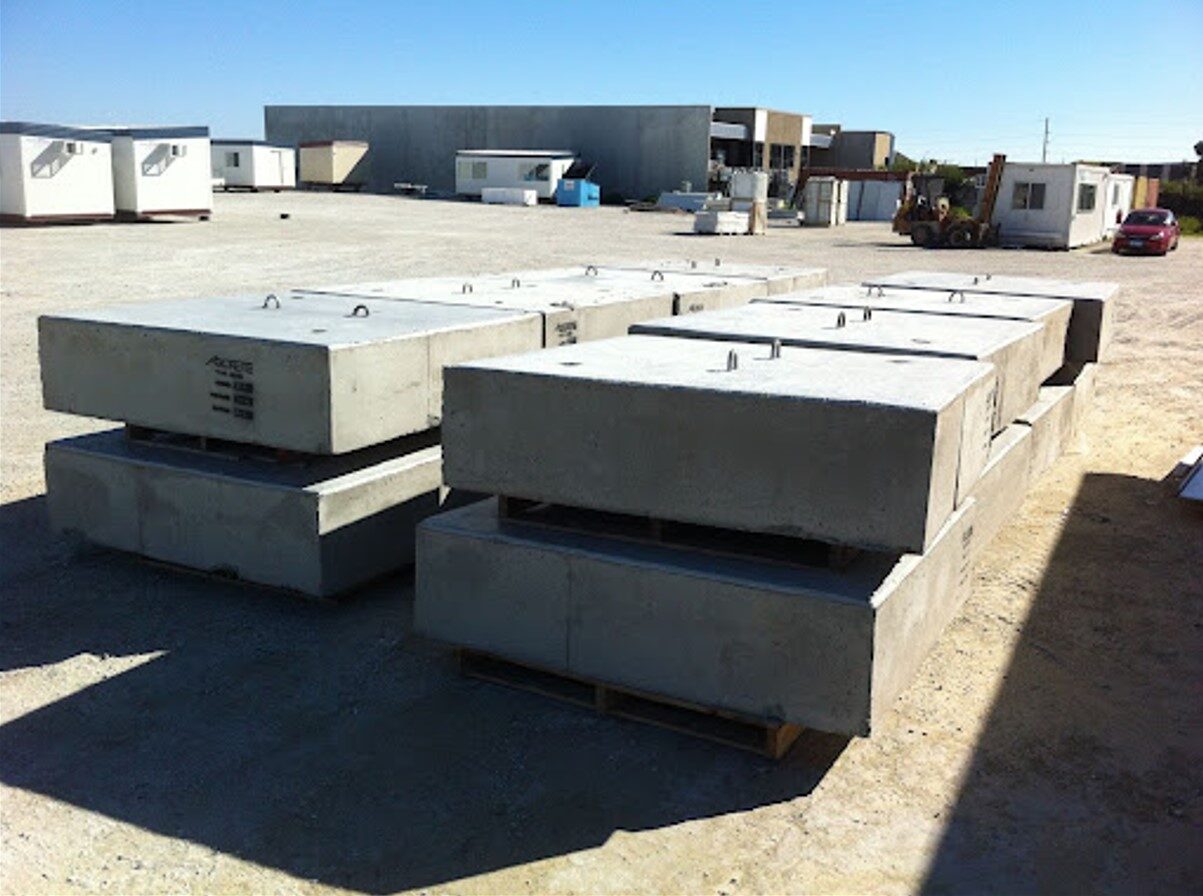
Temporary buildings must suit the environmental conditions of their location. Wind region classification determines the level of structural reinforcement and tie-down required. In WA’s north-west, Region D zoning applies (the highest cyclonic classification in Australia) and requires specific engineering to meet safety and compliance standards.
Instant Transportable Offices supplies buildings certified for both cyclonic and non-cyclonic regions, including full tie-down systems and footing designs suited to each site. We also account for corrosion zones and coastal placement, recommending material upgrades where needed. Engineer sign-off will also be arranged as part of your install process.
For more details on regional classifications and how they affect building selection, visit our page on Cyclonic Ratings for Buildings.
Power requirements vary depending on how each space will be used. Offices, crib rooms, HVAC systems and comms infrastructure all place different demands on your setup, so a load assessment should be done early in the planning process.
Smaller and standard buildings typically run on a 15 amp connection, but larger or higher-use buildings can be supplied as single-phase, 32 amp hard-wired units to support additional equipment and heavier loads. We’ll help determine the right supply option for your site, whether that’s mains power, generator, or a solar-hybrid system.
Fuel logistics, distribution boards, RCD protection and UPS backup for comms equipment should also be considered, especially for remote or frequently relocated setups.

Water supply and wastewater management should be considered alongside building selection. If mains access isn’t available, a potable water source and appropriate tank sizing will need to be factored in, along with backflow prevention. For wastewater, we offer above-ground tanks or underbuilding tanks that save valuable space on tight sites.
Amenity ratios should align with the number of staff onsite, including compliant options where accessibility is required. Instant Transportable Offices offers a range of supporting units including ablution blocks, disabled accessible buildings and site laundries—all configured to suit the scale and location of your project.
A well-planned site layout helps everything run smoother and safer. Think about how zones will function. Quiet admin areas, crib rooms, amenities and plant access should each have defined boundaries to reduce noise, traffic and disruption.
Pedestrian and vehicle separation is critical, especially around delivery zones and high-traffic areas. Lighting, shade, and access paths should be considered during placement. Safety infrastructure like muster points, fire extinguishers, first aid stations and eyewash stations should be integrated early in the layout to support compliance and day-to-day usability.
Temporary buildings must meet the same baseline compliance standards as permanent structures. That starts with correct classification under the National Construction Code, and extends to accessibility requirements under AS1428, emergency egress, signage, and fire safety systems.
Electrical sign-off, environmental controls, and local authority approvals may also be required depending on the location and length of use.
Instant Transportable Offices works to ISO 9001, 45001 and 14001 standards, giving you confidence in the quality, safety and environmental compliance of every setup we deliver.
Energy use, environmental controls and compliance obligations should all be factored in early, particularly on remote or mobile projects. For buildings that move frequently, energy efficiency becomes more complex. Each new location brings different orientation, climate and operating conditions, which can affect performance and compliance. Traditional energy assessments may not be enough.
We can help assess power demand, insulation, ventilation and shading based on typical use and likely relocations. For some clients, this includes flexible energy assessment methodologies that consider multiple orientations and climate zones, in line with NCC and state requirements. If you’re unsure whether a formal energy assessment is required, we can help you evaluate what’s needed and what’s not.
Beyond energy, broader environmental measures such as dust suppression, stormwater planning, spill control and waste segregation also apply. All Instant Transportable Offices buildings are manufactured under ISO 14001, supporting a more responsible, lower-impact site setup.
Temporary site setups run smoother when the timeline is mapped from the beginning. That includes everything from when your buildings are ordered to delivery, installation, commissioning and final pickup or relocation. For remote sites or seasonal projects, allowing for weather and access constraints is important to avoid unnecessary delays.
When you hire through Instant Transportable Offices, we take care of the full process in-house. We handle delivery, set-up and collection ourselves, so there’s no need to coordinate multiple contractors. It’s a one-stop solution that gives you more control, less admin and fewer headaches on site.
Choosing between hiring and buying comes down to how often and how long you need buildings in service. Short-term or infrequent projects are often best suited to hire, while frequent relocations or consistent site use can make ownership more cost-effective over time. Relocation frequency, utilisation rates and the building’s residual value should all be factored into the decision.
Instant Transportable Offices offers flexible hire, purchase and hire-to-buy options, with rapid availability from our WA-built stock. For some clients, hire-to-buy provides the best of both worlds, allowing them to start with a rental and transition to ownership if ongoing demand for temporary sites is clear.
Getting a temporary site operational takes more than just placing buildings on the ground. The right partner can streamline the process, reduce risks and save you time. Instant Transportable Offices offers demountable buildings for sale and hire, along with the in-house expertise to plan, deliver, install and remove them without the need for multiple contractors.
Our WA-built fleet is ready to go, and our team knows how to get sites operational quickly and correctly.
Call 1300 556 241 or enquire online to start planning your next site deployment.
Portable offices solve practical problems across a range of industries. Some need a workspace delivered fast. Others need buildings that can handle remote conditions, rough weather, or tight access.
They’re used when timeframes are tight, when space is limited, or when there’s no room for delays. Built to perform from day one, these units are designed to show up ready, no matter the challenge.
Here’s how different sectors are using them and what makes these units a smart choice when you need space that works.
On high-pressure sites, delays cost money. Whether it’s a remote mining camp or a suburban construction project, teams need facilities that are functional, compliant, and ready on arrival.
Portable offices offer exactly that. They’re engineered to handle rough ground, long shifts, and WA’s harsh conditions. Cyclonic-rated units are available for Region D zones, complete with certified tie-down systems. Most setups include air conditioning, insulation, and power outlets as standard (with layout options to suit everything from site management to crib rooms).
A contractor operating in the Pilbara needs a quick office and lunch space for a FIFO team. Within days, two modular units are trucked in, installed with kitchenette and split-system air con, and tied down to engineered footings. Work starts immediately with no build delays and no setup issues.
Training providers and schools often face space shortages, especially during enrolment spikes, refurbishments, or offsite programs. Traditional builds take time and approvals. Portable offices offer a faster, simpler way to scale up.
These units can be configured as classrooms, admin offices, breakout rooms, or storage. They come insulated, air-conditioned, lighting, and data points. Because they’re modular, they can be added or removed as needed so there’s no major disruption to operations.
A Perth-based RTO launches a short-term training course in regional WA. Instead of leasing a venue, they deploy two custom-fit portable offices on a partner site. One is set up as a classroom, the other as an admin base. Power, lighting, and internet are connected on arrival. The program runs without a hitch, and the buildings are packed down at the end of term.
When government departments roll out temporary services or respond to emergencies, speed and compliance are critical. Portable offices make it possible to set up operational bases, admin hubs or public access points with minimal lead time.
Every unit meets National Construction Code requirements and can be built to AS1428 accessibility standards. They’re a reliable option for seasonal programs, regional outreach, or emergency deployments where delays aren’t an option.
A regional council needs a temporary customer service centre during civic building renovations. A compliant portable office with a reception fit-out, split-system air con, and ramp access is delivered and installed within 72 hours. It stays on-site for three months, keeping public services running without disruption.
Behind every good event is a solid back-of-house setup. Organisers need ticket booths, green rooms, first aid points and event control that look sharp and work reliably (all within tight timelines).
Portable offices are a go-to for event crews who can’t afford to wait or deal with patchy infrastructure. Units can be customised with interior fit-outs, power, air con, lighting and branding. Exterior cladding options are also available to match the event’s look and feel — so it doesn’t have to look like a portable.
A major WA music festival needs a branded ticket booth and artist coordination space. Within days, two modified offices are delivered. One with counters and point-of-sale power, the other with workstations and privacy screening. Both units are clad in timber-look finish to match the site aesthetic.
Farmers and agribusiness operators need solutions that can move with the seasons. It doesn’t matter if it’s for harvest, shearing, or seasonal packing, having a mobile base helps keep things efficient and comfortable for crews.
These units are built for WA’s rural conditions. They come insulated, air conditioned, and can be set up with seating, fridges, storage, and more internally. When the job moves, the building can also move so there’s no need for permanent infrastructure.
A wheatbelt farm brings in a shearing team for four weeks. A portable lunchroom with kitchenette, seating and split-system air con is dropped in beside the sheds. Staff get a clean, cool space to break and it’s packed up and moved to the next farm at season’s end.
In freight yards, depots or pop-up terminals, operations often run from the back of a ute or a borrowed space. A portable office gives teams a proper base that’s ready to use and easy to relocate when needed.
Units can be delivered with power, lighting, air conditioning and basic essentials like kitchenettes. From there, businesses can fit them out internally to suit their workflow, whether that’s for dispatch, admin, or coordination. If sleeping space is needed, our modular accommodation range is a better fit.
A WA logistics firm sets up a new container hub outside Kalgoorlie. Instead of building from scratch, they deploy a portable site office with two workstations, a fridge, and data access. The team is operational in under a week and the building is ready to move if the route shifts again.
When a crisis hits, there’s no time to wait for builds or permits. Portable offices provide a fast, reliable base of operations for emergency services, councils, and recovery crews.
These units are delivered ready to go, with power, lighting, air conditioning and essential fittings. They can be used as coordination hubs, medical posts, admin centres or public information points. For more complex needs, modular offices with toilets or accommodation can be added alongside.
Following storm damage in a regional WA town, a local council sets up a temporary relief centre. A portable office is delivered and activated as a base for staff and community services. Within 24 hours, it’s operational and helping coordinate support and information for residents.

Every site has different needs, and portable offices can be tailored to match. We take care of the essentials, and you can handle the internal fit-out if needed. Units can be tailored to suit the job, site, and location.
We offer (and not limited to):
If you need something functional, durable and ready to go we’ll make sure it’s built to specifications and installed properly.
If you need extra space without the delay, our portable offices for sale or hire are ready to go. Built tough, easy to customise, and compliant from the ground up, these units are designed to work where you do.
Talk to our team on 08 6325 4084 or send us an online enquiry about what you need on-site. We’ll help you choose the right setup and get it delivered fast.
Every site’s different but the problems are usually the same. Timelines blow out, space gets tight, and no one wants to wait around for a permanent build. We see it all the time on jobs across WA, from metro projects to remote work.
That’s why more crews are choosing portable dongas. They sort the basics fast (whether that’s space for on-site offices, lunchrooms, or crib huts) and let you get on with the job. More often now, they’re the go-to solution from day one.

Setting up a worksite doesn’t need to drain the budget or blow out your schedule. Permanent buildings take months and come with extra costs (such as approvals, site works, trades, and delays). Portable dongas skip all that. They show up ready to go.
It doesn’t matter if it’s a single office or a full setup, you get the space you need without the traditional overheads. For projects that move fast or shift locations, it makes a lot more sense to go portable and keep things moving.

Flexibility matters on-site, especially when timelines shift, headcounts change, or scopes blow out.
One week you need a basic setup, and the next you’re managing extra crew, subcontractors, or inspections. Dongas make it easy to adjust without delay. You can add new units, shift layouts, or move buildings around as the job changes.
No need to start over or slow things down. Just plug in what you need and keep moving.

Remote WA sites cop it tough with their fair share of heat, dust, and wind. Our dongas are built to handle it. We supply portable buildings engineered for cyclonic regions, including Region D2, with certified tie-down systems, suitable concrete footings, and sign-off by qualified structural engineers.
Units are insulated, well-ventilated, and finished to suit both inland and coastal sites. So whether you’re up north, out east, or anywhere in between, you can count on them to hold up and meet all compliance requirements.For more information on cyclonic ratings for buildings, please refer to our General Specification Brochure.

A well-fitted space makes a big difference on-site. Our dongas for sale include air conditioning, lighting, power, and proper ventilation to keep your team comfortable through long shifts and tough weather.
Each unit is built to meet current worksite standards, so compliance is sorted from day one. It’s a simple way to provide the right conditions without cutting corners.
Choosing the right infrastructure can make or break your setup. Portable dongas offer a simple, cost-effective solution that works across a wide range of worksites in WA.
Explore our range of dongas for sale and hire to find a fit that works for your project. If you need guidance or want to talk through your site’s requirements, call our team on 08 6325 4085. We’re here to help you get set up, start to finish.
If you’re looking to buy a donga, figuring out the right size and layout is one of the most important decisions you’ll make.
The way a portable building is set up can affect how your team works, how comfortable the space is, and how well it fits your job. Some are built for open offices, others for private rooms or mixed use.
In this guide, we’ll run through the different options and what to look for when choosing a setup that fits your needs.
The size and layout of a donga directly affect how useful it is on site. A small unit might suit a single person working short term. A larger one with more space or separate rooms can support a full team, store gear, or create areas for meetings or downtime.
Layout also plays a big role. Open rooms give you flexibility for desks, tables or shared work. Two-room or split layouts are better when you need privacy, quiet, or separate functions in one building.
If your needs are likely to change or if you’re not sure what layout makes the most sense, we can help you work through the options. Our team has worked across all kinds of worksites and projects, and we’re here to make sure you get the right setup from the start.
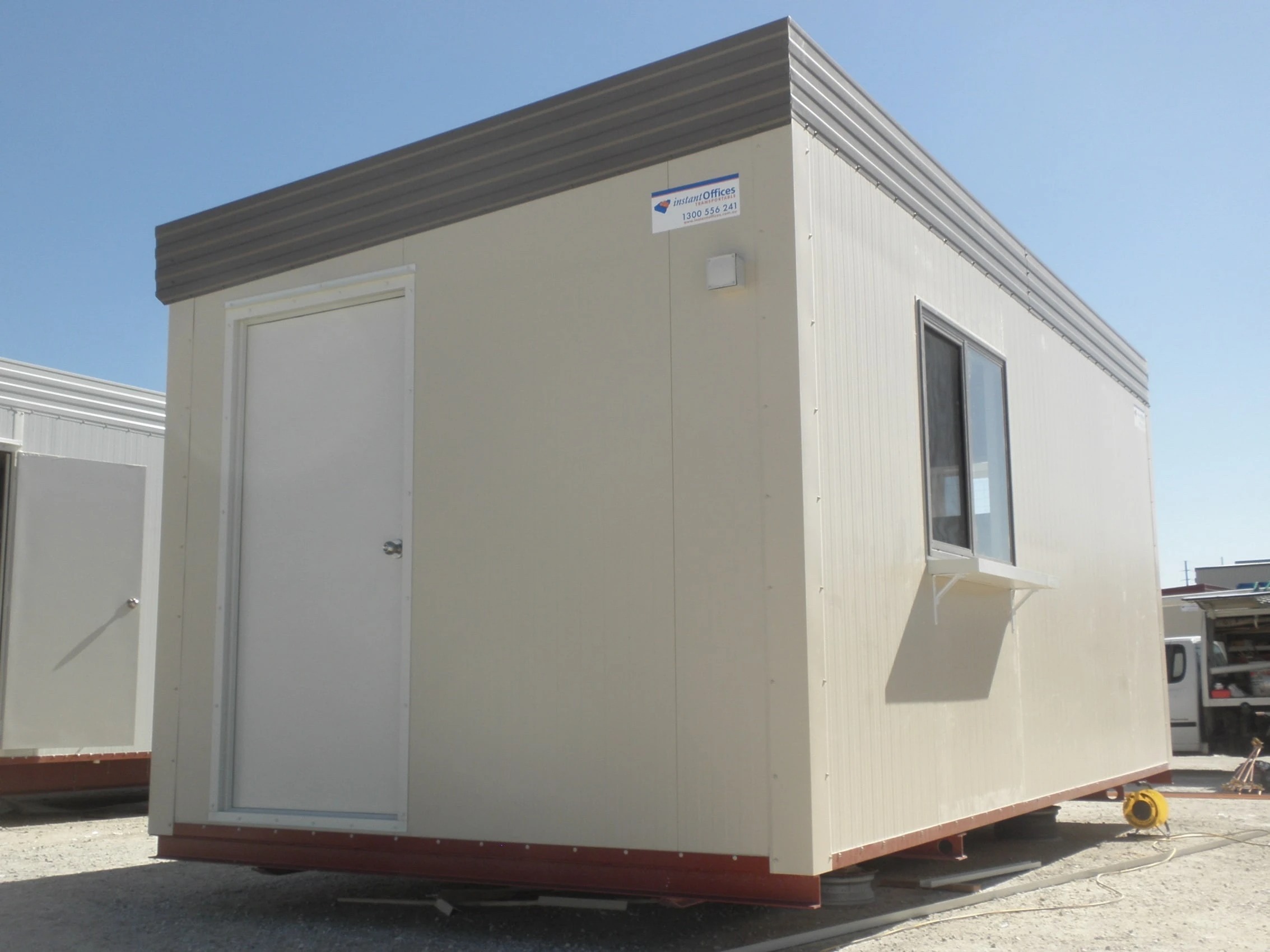
At Instant Transportable offices, we offer 12 different types of dongas for sale to suit a range of business needs. These options vary in size and layout, giving you flexibility depending on how much space you need and how you plan to use it.
Not sure what size is right for you? Let us know what you’re using it for and we’ll help match you with the best option.
Different layouts suit different types of work. Some projects need open space for a team to work together. Others need quiet, private rooms or a split setup that handles multiple uses in one building.
Here are the most common layout types and when they work best.
Good for:
Open rooms give you flexibility with furniture and can be rearranged as needed. Great when people are working together or using the space in shifts.
Good for:
This setup creates a clear divide, which is useful when you need quiet, separation, or dual use in the same building.
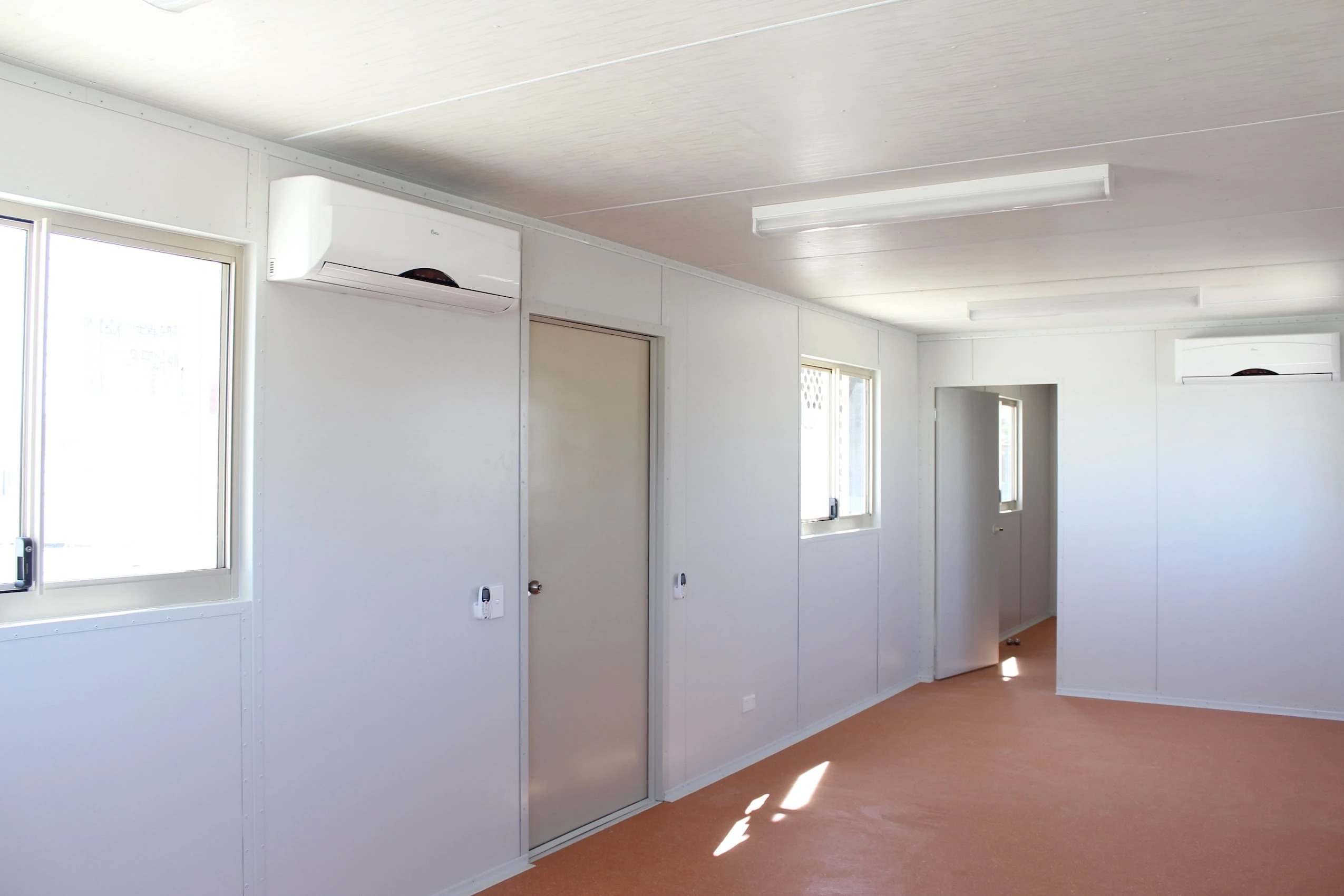
Good for:
Partitions help manage noise, traffic flow and privacy. They work well when people are moving through the space or using it for different things at once.
Once you’ve locked in the size and layout, it’s worth looking at the features inside the donga. These are the details that affect how comfortable and usable the space will be day to day.

A must for WA conditions, especially in remote or high-temperature areas. All our units come with reverse cycle air conditioning to keep things comfortable year-round.
Well-placed lighting and multiple power outlets make a big difference. Think about how many people will be using the space, where desks or gear will go, and what needs to be plugged in.
Windows help with airflow and natural light, which can improve comfort and energy use. Placement matters too — it can affect how hot the space gets or how well you can position furniture inside.
The way your donga faces can impact heat, glare and access. It’s worth thinking about before delivery (especially if you want the door or windows to face a certain direction).
You can also choose extras like insulation, blinds, flooring types, or skirting. These help with comfort, energy use, and overall presentation.
Choosing the right donga comes down to understanding your space, your team, and how the building will be used. With a wide range of sizes, layouts and internal features available, it’s worth taking the time to get it right.
If you’re still not sure where to start, give us a call on 08 9406 6600. We’ll walk you through all of our dongas for sale and help you find a setup that fits your project and your site.
Demountable buildings (also known as dongas) are one of the most practical space solutions around, especially here in WA.
Whether you’re managing a remote worksite, gearing up for a major project, or need extra space fast, these portable buildings tick all the boxes. We’ve supplied thousands across the state, and over the years, we’ve seen them used in just about every way you can think of.
Here’s a look at some of the most common ways our clients put them to work.
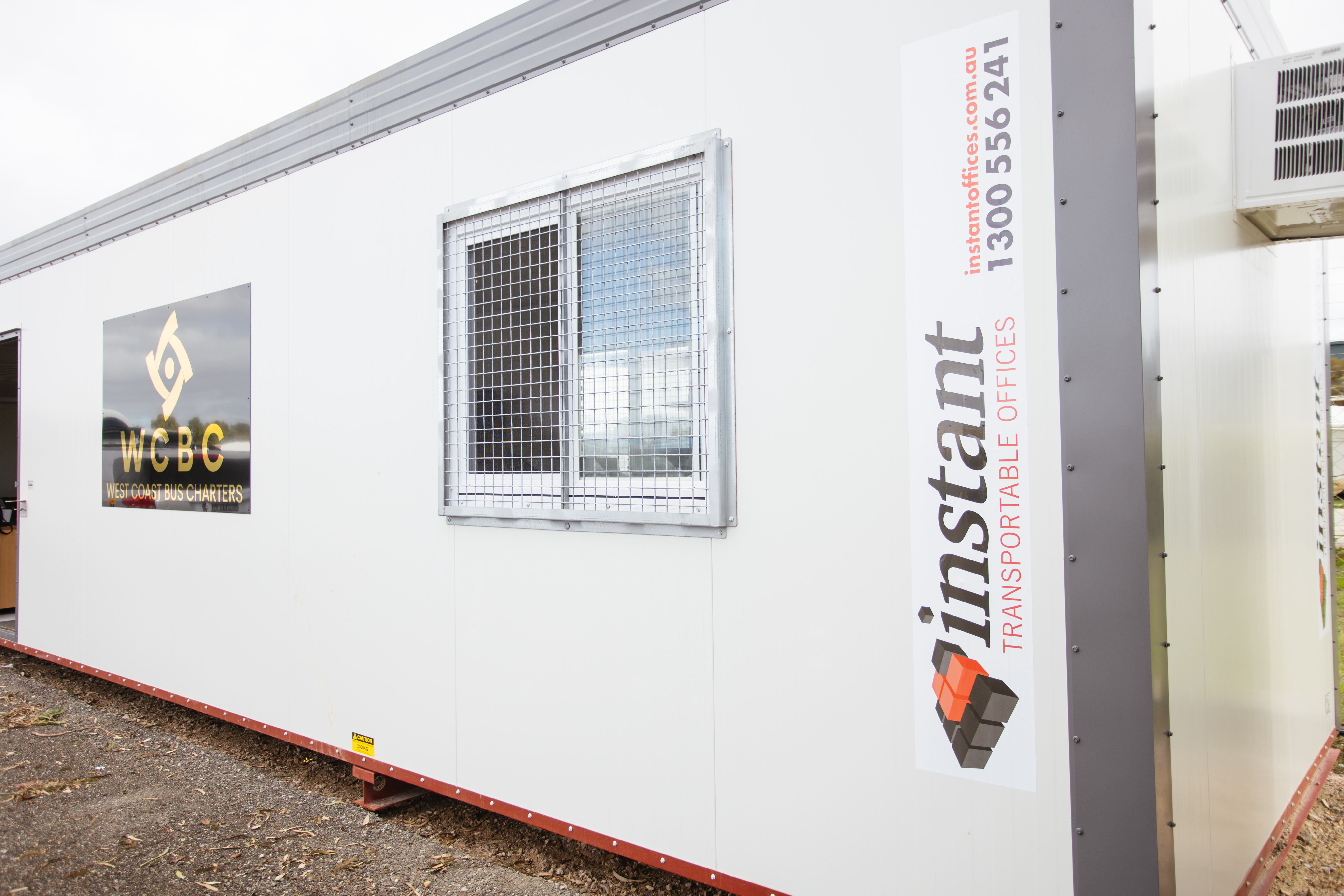
Site offices are easily one of the most common uses for demountable buildings across WA. They give crews a reliable base to plan the job, hold meetings, and get admin sorted — without waiting weeks for a permanent structure to go up.
We’ve supplied these to construction sites, mine sites, council depots, and everything in between. Some are basic open-plan setups, others are fully kitted out with meeting rooms, storage, and more. It all depends on how you work.
If you’ve got something custom in mind, that’s not a problem for us. We’ve built thousands of variations over the years and can tweak the design to suit whatever your site throws at you.
When things go wrong, having the right setup can make all the difference. That’s why a lot of our clients use demountable buildings as emergency response rooms (especially in regional areas like the Pilbara).
These buildings are designed to stay put and keep people safe, even when the weather turns nasty. We can build to full Region D2 cyclonic spec, which means they won’t fall apart when the wind picks up. They’re solid, reliable, and easy to deploy fast when response time matters most.
If you’re managing safety on remote worksites or planning for worst-case scenarios, these demountable solutions give you a secure, compliant space you can count on.
On-site training is critical for keeping crews safe, compliant, and working efficiently (especially on remote or high-risk jobs). But organising off-site venues can be costly, time-consuming, and disruptive to daily operations.
That’s why many of our clients choose to install dedicated training rooms on-site. It gives teams a focused, well-equipped space to run inductions, toolbox talks, safety briefings, or upskilling sessions.
Having a professional training space on-site helps ensure your team stays informed, compliant, and ready to work without unnecessary delays or downtime.
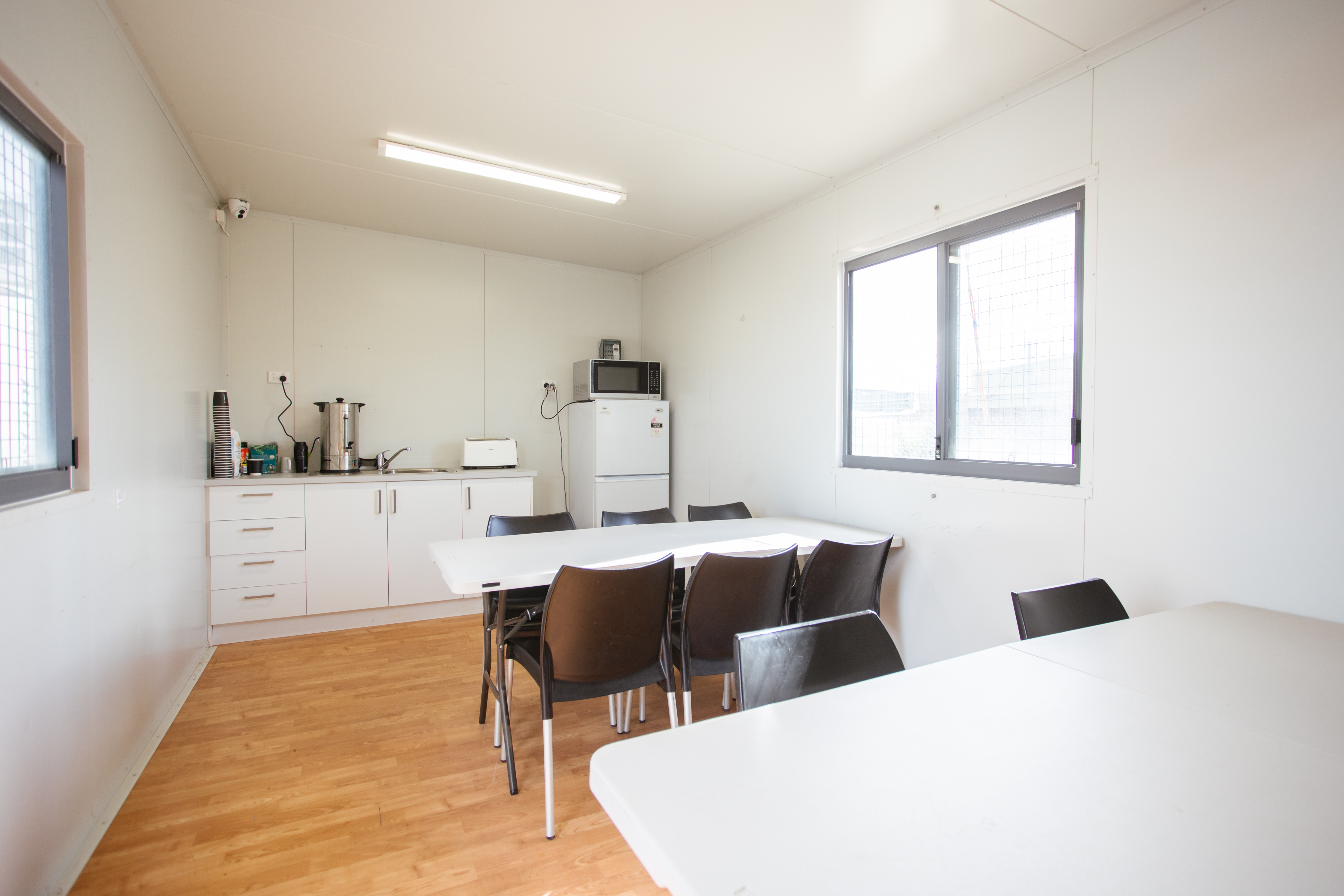
Every site needs a clean, comfortable space where workers can take a break, grab some food, and reset. A well-built crib room gives crews a proper place to rest, which goes a long way toward keeping morale and productivity up.
We build our crib rooms with practical features that make them easy to use and durable enough for WA worksites. They’re fitted with proper kitchenettes and can be tailored to suit team sizes, shift patterns, or site layouts.
We know what crews expect when they clock off for a break, so we build our crib rooms to match.
Injuries can happen anywhere, and when they do, you need a space that’s ready to handle it. A first aid room gives your crew somewhere clean, private and properly set up to deal with medical issues fast.
We’ve delivered these to construction sites, mine camps, council depots and remote projects right across WA. They’re built to suit real-world conditions and can be kitted out with everything you need to respond quickly on the ground.
If you’re running a high-risk site, a first aid room isn’t an afterthought — it’s part of being WHS ready for whatever the day throws at you.
From site offices to first aid rooms, we build portable dongas that are ready to go when and where you need them.
All of our buildings are designed and built right here in WA, and we deliver across the state. If you need something custom, we’ll work with you to get it sorted fast.
Give us a call on 08 6325 4085 to chat about your project, or check out our full range of portable dongas for sale and hire today.